


What Does a Concealed-Lock Cage Feel Like Under Clothing?
A concealed-lock cage is often marketed as the discreet choice, but what does that actually mean once you put on underwear, jeans, or work trousers? The biggest difference is usually not that the entire cage becomes invisible. It is that the locking area sits closer to the shape of the device, with less hardware projecting outward.
That lower-profile top can reduce snagging, pressure from a hard lock body, and the small visible bump that an external padlock sometimes creates. You will still feel the cage, the base ring, and the way the device moves with your body.
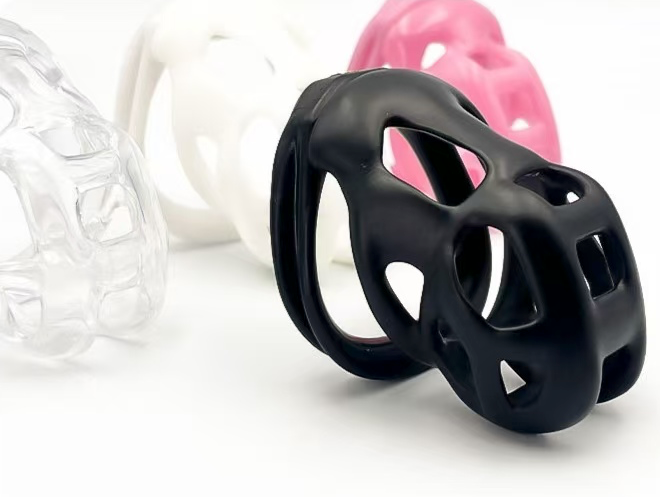
The Lock Feels Less Separate from the Cage
With an external padlock, you can often identify exactly where the lock is because it hangs or rests against the body as a separate object. It may tap against the cage, press into a waistband, or rotate when you change position.
A concealed or integrated lock sits within a lock channel or housing. Under clothing, the top of the cage can therefore feel smoother and more unified. There may be less metal-on-plastic movement and less chance of a loose padlock shifting to one side.
That does not guarantee silence. A key cylinder, connector, or loose-fitting part can still make noise. Product construction and fit matter more than the word “concealed.”
Clothing Changes the Experience
Soft joggers and loose trousers place little pressure on the device, so the cage may feel more mobile. Fitted jeans hold it closer to the body, but seams and stiff fabric can press on the lock area or front of the cage.
Supportive underwear usually creates the most predictable experience. It can keep the cage from swinging and help the curved profile follow the body. Underwear that is too tight, however, may compress the cage into the skin or force the base ring into an uncomfortable angle.
Try the device under the actual clothes you plan to wear. A cage that feels discreet in loose clothing may feel very different under a suit, cycling-style underwear, or jeans with a low rise.
The Shape Matters More Than the Lock Alone
A hidden lock can reduce one visible bump, but cage length and curve determine most of the overall outline. A long cage with a concealed lock can still project forward. A short cage with an external lock may sometimes appear flatter.
The Concealed Python Strap Cobra Chastity Cage combines a concealed mini-lock with a lightweight resin body and several cage-size options. That makes it useful for comparing how lock style and cage length work together rather than assuming one feature creates discretion by itself.
When looking at product photos, inspect the side profile. Front photos show the design, but side photos reveal how far the cage and lock project away from the body.
Sitting Is Often the Real Test
Standing in front of a mirror is not enough. Sitting changes the angle between the thighs, pelvis, base ring, and waistband. A lock housing that feels flat while standing may press into the lower abdomen when seated. A cage that looks compact may tilt forward if the ring or gap is too large.
Sit in a desk chair, car seat, and soft sofa during a short test session. Notice whether the top of the cage catches the waistband, whether the ring shifts, and whether the front edge receives concentrated pressure.
A discreet device should remain manageable in these positions without requiring constant adjustment.
Will Other People Notice?
In most everyday situations, people are not closely studying the shape of someone else’s clothing. A stable, curved cage under supportive underwear may be less noticeable than the wearer fears.
The more common causes of visibility are movement, an overly long profile, loose underwear, and clothing that stretches tightly over the front. A noisy external lock can also make the wearer feel more self-conscious even when nothing is visibly obvious.
Choosing darker or heavier fabrics may reduce visible outlines, but clothing should never be used to crush an incorrectly fitted cage into place.
What a Concealed Lock Does Not Fix
A concealed lock cannot correct:
- a base ring that is too large or too tight;
- a cage that is too long or narrow;
- an unsuitable ring-to-cage gap;
- rough contact points;
- poor alignment between the cage and body;
- a connector that rotates excessively.
If the device shifts, pinches, or pulls, solve the fit problem first. Hiding the lock will not make a bad fit comfortable.
A Practical Daily-Wear Test
Before wearing a concealed-lock cage outside the home, test it in stages:
- Wear it for a short period without clothing and inspect alignment.
- Add supportive underwear and walk around.
- Try sitting and bending.
- Add the trousers you plan to wear.
- Check again after movement and a bathroom visit.
Keep the key available and remove the device if you notice numbness, sharp pain, unusual swelling, cold skin, or color change.
For more low-profile options, compare the 3D-printed chastity cage collection and the small Cobra collection.
Final Thoughts
Under clothing, a concealed-lock cage often feels smoother at the top, less likely to snag, and less hardware-heavy than a cage with a hanging padlock. The effect can be meaningful, especially during walking and sitting, but it is only one part of discretion.
A truly discreet setup combines a suitable cage length, body-following curve, stable base ring, sensible gap, low weight, smooth lock housing, and supportive clothing. Think of the concealed lock as the finishing detail—not the entire solution.
FAQ
Is a concealed-lock cage completely invisible under clothing? No. It can reduce lock projection, but the cage length, curve, ring stability, underwear, and trousers still affect the outline.
Are concealed locks quieter than padlocks? They can be, because there is less loose hardware, but construction quality and fit determine whether any parts move or click.
Can beginners use a concealed-lock cage? Yes, provided the cage offers suitable size options and the wearer tests the fit gradually.


